Houston Drug Crime Attorney
A drug charge doesn’t have to ruin your livelihood and well-being. Yes, Texas prosecutors take drug crimes seriously, and several changes to Texas drug laws have increased the penalties for drug crimes. As a result, if you have been charged with a drug crime in Texas, you must have an experienced criminal defense representation on your side.
If you are looking for a Houston drug crime attorney, Jose Ceja is a Board-Certified Criminal Law specialist and former prosecutor available 24/7 for a free consultation. Hablamos español.
Without an experienced lawyer, you may be subjected to an extensive prison sentence, substantial monetary fines, a criminal record, and other serious penalties without proper defense. Contact Ceja Law Firm for a free consultation today to get started.
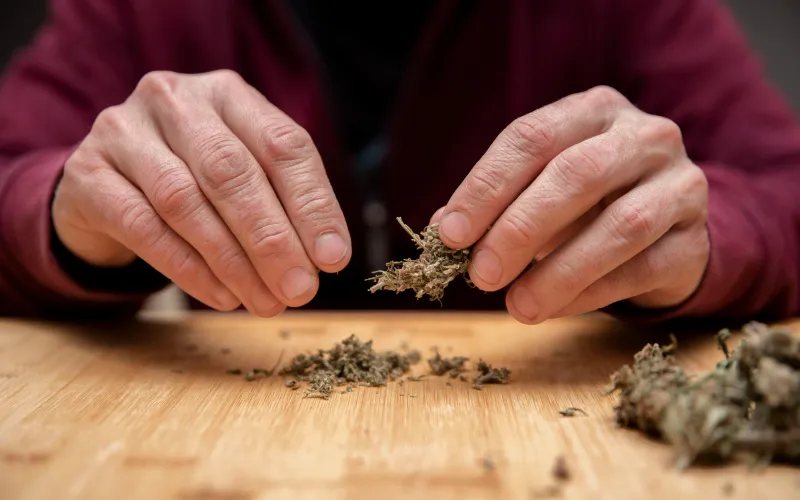
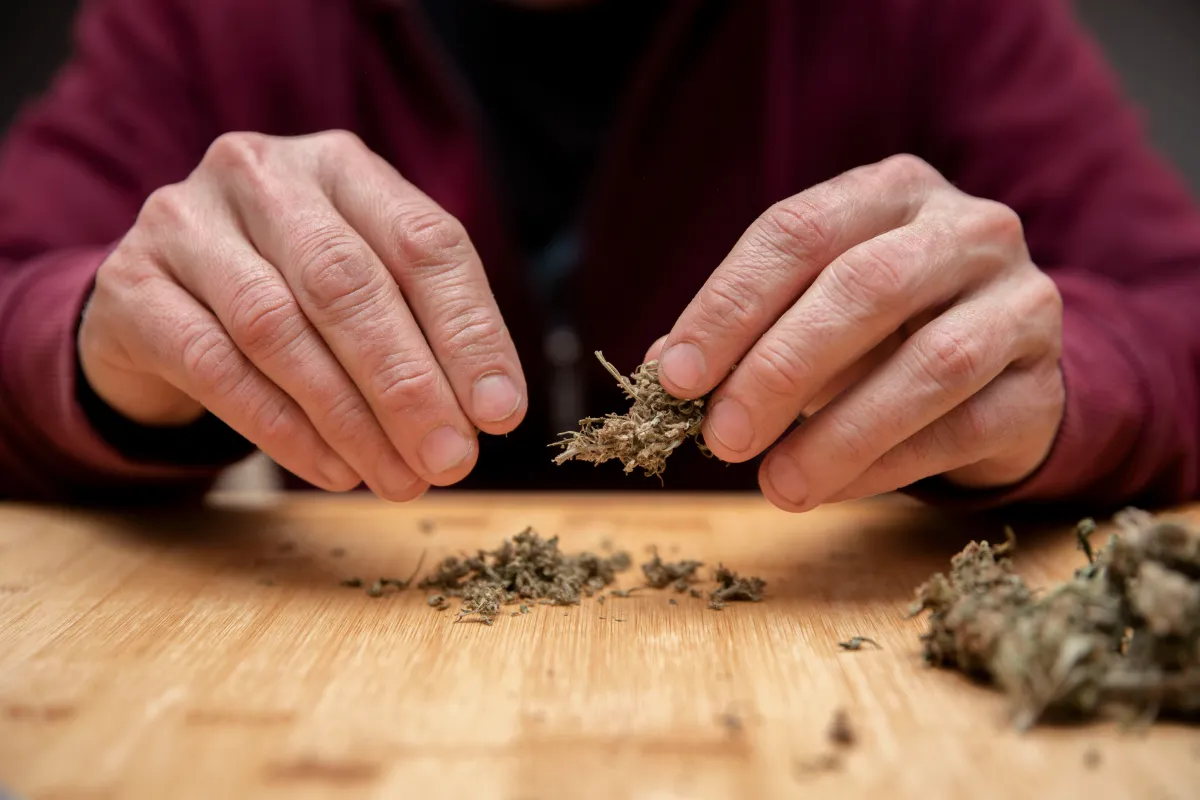
Call Ceja Law Firm 24/7 for a free, confidential consultation. Hablamos español.
Discuss Your Case For Free With Our Houston Drug Crimes Lawyer
Whether you’ve been charged with drug possession, drug trafficking, or another drug-related crime, you need an experienced criminal defense attorney on your side. If this is your first drug-related offense, you may even be able to obtain a reduction of charges or qualify for a diversion program. Contact our criminal defense lawyer, Jose Ceja, today to learn more about our criminal defense services.
Mr. Ceja is board certified in criminal law and has an extensive career and a proven track record of successfully advocating for our clients in drug crime cases. Having been a former prosecutor himself, his knowledge of prosecutorial techniques is invaluable in developing viable defense tactics for his clients.

Types of Drug Crime Defense Cases We Handle
The criminal defense attorneys at Ceja Law Firm PLLC are well-versed in all federal and state drug crime charges, including those involving cocaine, marijuana, methamphetamines, heroin, ecstasy, and other types of drugs. Our attorneys provide excellent legal advice and trial representation to Texas residents facing the following types of drug crime charges:
Drug possession
Intent to sell / intent to deliver
Manufacturing, sale, trafficking, and distribution of drugs
Drug crime charges involving proximity to schools and churches
Drug-related weapons charges
Drug-related weapons charges
Civil asset forfeiture
Driving while under the influence of drugs
White-collar criminal charges related to money laundering or racketeering
Federal narcotics charges
Felony drug charges
Intent to distribute drugs
Prescription drug charges for Adderall, Xanax, Vicodin, etc.

Jose Ceja has the experience to defend you. Call Ceja Law Firm today.
Texas Drug Crime Laws
Texas is notorious for prosecuting a large number of drug-trafficking cases due to its proximity to the Mexico border. The legislature and courts have taken steps to increase the enforcement of and penalties for drug crimes to address the number of illicit drugs coming across the border. Under the Texas Controlled Substances Act, drug possession is a crime that can result in varying degrees of charges. For example, a person may be charged with a simple misdemeanor for possession of a small amount of marijuana. Alternatively, they could be charged with a complex felony or under federal law, resulting in more serious fines and penalties.

Texas Penalty Groups for Controlled Substances
Texas classifies all controlled substances into Penalty Groups, and the group a drug falls into directly affects the severity of the charge. Understanding which Penalty Group applies to your case is one of the first things an attorney will examine, because it determines the range of punishment before any other factors are considered.
| Penalty Group | Substances Covered | Charge Range |
|---|---|---|
| Penalty Group 1 | Heroin, cocaine, meth, many opioids | State jail felony → first-degree felony |
| Penalty Group 1-A | LSD (measured by dosage unit) | State jail felony → first-degree felony |
| Penalty Group 2 | Ecstasy, PCP, psilocybin mushrooms | State jail felony → first-degree felony |
| Penalty Group 2-A | Synthetic cannabinoids (K2/Spice) | Class B misdemeanor → first-degree felony |
| Penalty Group 3 | Valium, Xanax, anabolic steroids | Class A misdemeanor → first-degree felony |
| Penalty Group 4 | Certain codeine compounds | Class B misdemeanor → first-degree felony |
Charges within each Penalty Group escalate based on the amount of the substance involved. Even a small quantity of a Penalty Group 1 substance can result in a state jail felony, while larger amounts can reach first-degree felony status. The difference between a misdemeanor and a felony charge can sometimes come down to a few grams.
For prescription medications—such as Xanax, Adderall, or Vicodin—the charge depends on whether the defendant had a valid prescription. Without one, possession of these substances falls under Penalty Group 3 or 4 and can still result in felony charges depending on the quantity.
Drug Possession and Use Defense
In many cases, drug possession charges are the least serious drug crime charges. However, it’s important that you don’t take drug possession charges lightly. Prosecutors can charge defendants with class C misdemeanors for possessing small amounts of marijuana to felony drug possession charges for more serious drugs, such as heroin. In drug possession cases, the prosecution needs to prove that the defendant had care, custody, and control of the illegal drug.
Possession cases often turn on the question of knowledge—did the defendant actually know the substance was present? In cases involving shared vehicles or residences, multiple people may have had access to the same space where drugs were found. The prosecution must establish that the specific defendant knowingly possessed the substance, not merely that they were nearby when it was discovered.
For first-time offenders charged with simple possession, Harris County courts may offer alternatives to conviction, including deferred adjudication or pretrial diversion. The availability of these options depends on the specific charge, the substance involved, and the defendant’s prior history.

Drug Possession with Intent to Distribute
Facing a charge of drug possession with the intent to distribute increases the seriousness of any drug-related charge. Multiple factors can lead prosecutors to bring this charge against the defendant. For example, if the defendant stored controlled substances in small packages or had a notebook with schedules and phone numbers of drug clients in his or her home, they may increase the drug possession charges to drug possession with intent to distribute.
The prosecution does not need to catch someone in the act of selling drugs to bring an intent-to-distribute charge. Circumstantial evidence—including the quantity of the drug, how it was packaged, the presence of scales or baggies, and large amounts of cash—can all be used to support this inference. Challenging the prosecution’s interpretation of that evidence is a key part of the defense in these cases.

Drug Trafficking and Manufacturing
In Texas, drug trafficking occurs when a person knowingly sells, purchases, manufactures, delivers, or brings a controlled substance or illegal drug into Texas. Under the Texas Controlled Substances Act, a person cannot knowingly or intentionally:
- Possess a list of chemicals with the intent to unlawfully manufacture a controlled substance, or
- Possess or distribute a list of chemicals knowing or having reasonable cause to believe that it will be used to unlawfully manufacture a controlled substance.
Texas prosecutors take drug trafficking and manufacturing charges seriously, and drug trafficking charges have one of the highest levels of potential prison time and fines. The maximum incarceration time for drug trafficking charges is 99 years. If you’re charged with a first-degree felony for drug trafficking, you will face 15 to 99 years in prison and a fine of up to $250,000.
Drug trafficking cases in Houston often involve federal agencies, including the DEA and Homeland Security Investigations, particularly when the alleged activity is connected to the Texas-Mexico border. When federal agencies are involved, charges may be brought in federal court rather than Harris County, and federal sentencing guidelines apply—which are often more severe than state penalties.
Drug Smuggling
Drug smuggling involves transporting controlled substances into Texas illegally with the intent to possess or distribute the drugs. Drug smuggling is a crime that involves crossing state lines. As a result, it is a federal crime. Defendants charged with the crime of drug smuggling will be subjected to federal sentencing guidelines.
What Happens After a Drug Arrest in Houston?
If you are arrested for a drug crime in Houston or Harris County, the process typically begins with booking at a local facility—often the Houston Police Department or Harris County Jail. From there, you will appear before a Harris County magistrate, usually within 24 to 48 hours, where bail conditions are set.
For misdemeanor drug charges, cases are assigned to county courts. For felony drug charges, the case may proceed to a grand jury for formal indictment before it reaches the trial court. At any point after arrest, your attorney can begin reviewing the evidence, challenging how it was obtained, and evaluating whether pretrial motions or diversion options apply.
Harris County courts sometimes offer alternatives for first-time offenders or individuals charged with small quantities, including deferred adjudication or pretrial diversion programs. Whether you qualify depends on the specific charge, the substance involved, and the prosecutor’s assessment of the case. Acting quickly—before charges are formally filed or a plea is entered—can significantly affect which options remain available.
Taking action early also affects the investigation itself. In drug cases, law enforcement may continue gathering evidence after an arrest. Having an attorney involved from the beginning can help protect your rights throughout that process.
Defense Strategies for Houston Drug Cases
Every drug case presents its own facts, and the right defense depends on the specific charge, the evidence the prosecution has, and how law enforcement conducted the investigation. At Ceja Law Firm, the defense strategy is built around a careful review of every step in the case—from the initial stop or search to the handling and testing of evidence.
Many drug cases begin with a traffic stop or a search of a home or vehicle. If law enforcement did not have a legal basis for the stop or search—or if the search exceeded the scope of a warrant—the evidence obtained may be subject to suppression. Suppression hearings are common in Harris County drug cases. A successful motion can result in key evidence being excluded, which often leads to dismissal or a significant reduction in charges.
Texas prosecutors sometimes bring charges based on constructive possession—meaning the defendant is alleged to have controlled drugs found in a shared vehicle, home, or space. These cases require the prosecution to prove that the specific defendant had knowledge of the drugs and actual control over them. When multiple people had access to the same space, this can be a meaningful defense.
Drug evidence must be properly collected, documented, stored, and tested. Errors in how evidence was handled or analyzed can affect the reliability of the prosecution’s case. An attorney can request lab records, review testing procedures, and challenge the accuracy of the results when appropriate.
For first-time offenders, Harris County offers programs that may allow a defendant to avoid a conviction entirely. Depending on the charge and circumstances, deferred adjudication or pretrial diversion may be available. If successfully completed, these programs can result in dismissal—and in some cases, the arrest may be eligible for expunction afterward.
Possession of Drug Paraphernalia
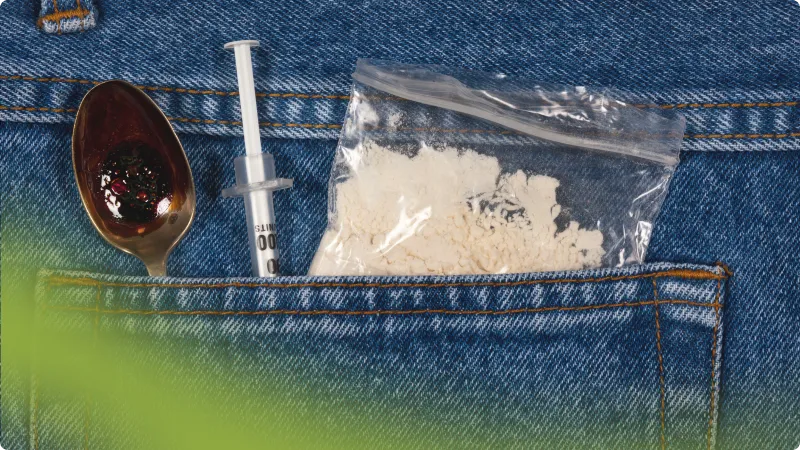
In Texas, possession of drug paraphernalia is a separate crime. Suppose a police officer finds a suspect with an item that could be used for packaging, processing, or consuming drugs. In that case, prosecutors may bring drug possession charges and additional possession of drug paraphernalia charges, a Class C misdemeanor in Texas. Possession of drug paraphernalia carries a fine of up to $500. However, if the suspect is charged with distribution or possession of paraphernalia with the intent to distribute or sell drugs, the suspect will face a Class A misdemeanor charge.
Marijuana Drug Crimes
Although several states have legalized the use of recreational marijuana in recent years, Texas has not. Possession of marijuana is still a crime in Texas. In most cases, defendants will face misdemeanor charges unless they are in possession of a large quantity of marijuana. In Texas, marijuana possession is defined as possessing any cannabis Sativa plant. Any preparation of the marijuana plant, such as a joint or a package with dried marijuana buds in it, is considered a crime.
The penalties range from 180 days to 99 years in jail, depending on the quantity of marijuana involved. Defendants can also face fines, driver’s license suspension, and other serious penalties. If you’ve been charged with a marijuana-related crime, it’s essential that you take it seriously and reach out to an experienced criminal defense attorney.

Don’t face them alone — call Ceja Law Firm today.
Frequently Asked Questions About Drug Charges in Houston

Yes, in some cases. Drug charges can be dismissed if the evidence was obtained through an illegal search and seizure, if the prosecution cannot establish possession, or if the defendant qualifies for a diversion program. The outcome depends on the specific facts of the case and the charge level. An attorney can assess the strength of the prosecution’s evidence and identify whether a dismissal is a realistic goal.
Harris County offers certain first-time offenders the opportunity to complete a diversion program or receive deferred adjudication in lieu of a conviction. If the program is successfully completed, the case can be dismissed. Whether you qualify depends on the charge, your criminal history, and the prosecutor’s discretion. Not all drug offenses are eligible—an attorney can advise whether these options are available in your case.
Yes. Many drug convictions in Texas result in an automatic driver’s license suspension, even if the offense was not traffic-related. The length of the suspension depends on the conviction. Contacting an attorney early can help you understand these collateral consequences and, in some cases, avoid them.
State drug charges are prosecuted under the Texas Controlled Substances Act in Harris County or other state courts. Federal charges are brought when the alleged offense crosses state lines, involves large quantities, or is part of an investigation by federal agencies such as the DEA or Homeland Security. Federal charges carry their own sentencing guidelines and are typically more severe than state charges for equivalent conduct.
Yes. Texas law allows prosecutors to charge someone with possession based on constructive possession—meaning you are alleged to have had control over drugs even if they were not physically on you. This is common in cases involving shared vehicles, homes, or rooms. Challenging whether the defendant had actual knowledge and control is a key issue in these cases.
If your drug case was dismissed or you were acquitted, you may be eligible for an expunction, which removes the arrest from your record entirely. If you received deferred adjudication, you may qualify for a non-disclosure order, which seals the record from most public searches. An attorney can evaluate your eligibility based on the outcome of your specific case.

Contact a Houston Drug Crime Defense Attorney Today
At Ceja Law Firm PLLC, we have extensive experience representing clients in DWI and various drug crime cases. Our attorneys have successfully defended clients in drug crime cases throughout the greater Houston area. If you face drug crime charges in Houston and need a skilled criminal defense attorney, we can help. Contact Ceja Law Firm PLLC today to schedule your free initial consultation and start your path to freedom.
Ready to fight your drug charge? A houston drug crime attorney at Ceja Law Firm is available 24/7. Call now for a free, confidential consultation. Hablamos español.