Houston Weapons Charges Attorney
If you or a loved one is facing weapons charges in Houston, our firm offers confidential consultations in Spanish. Speaking with an attorney does not trigger a report to ICE or any other government agency.
Houston weapons charges attorney Jose Ceja — Board Certified in Criminal Law, recognized as a Texas Super Lawyer, and former prosecutor — has represented clients facing weapons charges throughout Harris County and the greater Houston area.
That background — prosecuting cases and now defending them — gives him a clear view of how the state builds a weapons case and where those cases can be challenged.
Texas broadly protects gun rights, but the law draws precise lines around who can carry, what they can carry, and where. Crossing those lines, even accidentally, can mean a felony charge. If you are facing a weapons charge in Houston, the time to act is now.
Houston Weapons Charges Attorney: Quick Overview
This page covers criminal defense for weapons charges in Houston, Texas under Texas Penal Code Chapter 46. The most common charges are Unlawful Carrying of a Weapon (UCW) under § 46.02, Unlawful Possession of a Firearm by a Felon under § 46.04, Unlawful Possession of a Weapon in a Prohibited Place under § 46.03, and Possession of Prohibited Weapons under § 46.05. UCW is usually a Class A misdemeanor, but it can escalate to a felony when the person is legally prohibited from possessing a firearm, carries in a prohibited location, or possesses the weapon alongside another criminal allegation. Felon-in-possession is a third-degree felony with a 2–10 year range. Harris County prosecutors and federal law enforcement both actively pursue weapons cases. José Ceja is a Board Certified, former prosecutor offering free consultations.

What Counts as a Weapons Offense in Texas?
Texas Chapter 46 of the Penal Code governs weapons offenses. The most common charges fall into four categories.
Unlawful Carrying of a Weapon (UCW) — Texas Penal Code § 46.02
UCW is the charge most people think of when they picture a Houston weapons case. Since Texas enacted permitless carry in 2021, the law changed significantly — most adults 21 and older can now carry a handgun without a license. But UCW still applies when a person intentionally, knowingly, or recklessly carries a handgun and falls into one of these situations:
- They are under 21 years of age
- They have been convicted of assault, deadly conduct, terroristic threat, or disorderly discharge within the past five years
- The handgun is in plain view in a vehicle and they are under 21 or unlicensed
- They are engaged in criminal activity at the time
- They are prohibited from possessing a firearm under state or federal law
- They are a member of a criminal street gang
- They are carrying while intoxicated
A basic UCW is a Class A misdemeanor — up to one year in jail and a fine up to $4,000. Penalties escalate in several ways. Carrying in a prohibited place (such as a bar or school) under § 46.03 is a third-degree felony. Carrying while legally prohibited from possessing a firearm under § 46.02(a-7) is also a felony: a second-degree felony with a mandatory minimum of five years if the underlying prohibition stems from a felony conviction under § 46.04(a), or a third-degree felony if the prohibition is based on a misdemeanor family violence conviction or protective order under § 46.04(b) or (c).
Unlawful Possession of a Firearm by a Felon — Texas Penal Code § 46.04
If you have a felony conviction, Texas law prohibits you from possessing a firearm anywhere other than your home for five years after your release from confinement or supervision, whichever is later. After that five-year window, possession is limited to your residence. This is a third-degree felony with a punishment range of 2 to 10 years in prison.
A Class A misdemeanor domestic violence conviction also triggers a five-year firearm prohibition under this statute.
Unlawful Possession of a Weapon in a Prohibited Place — Texas Penal Code § 46.03
Even a person who lawfully carries a firearm commits a third-degree felony by taking that weapon into:
- Schools or school-sponsored events
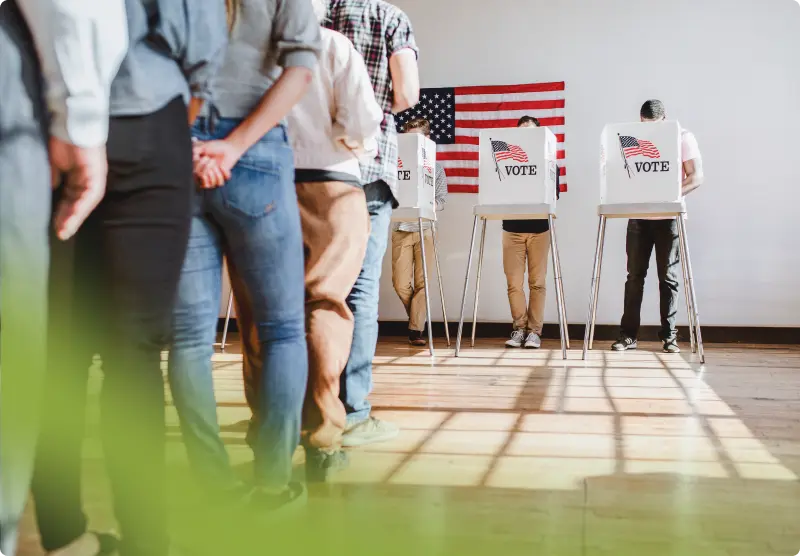
- Polling places on election day
- Courts and court offices
- Racetracks
- The secured area of an airport
- Within 1,000 feet of a designated execution site on the date of execution
- Premises deriving more than 51% of income from alcohol sales
- Correctional facilities
- Hospitals and nursing facilities (without written authorization)
- Mental hospitals
- Amusement parks
- Churches, synagogues, and places of worship when legally effective § 30.06/30.07 notice applies (note: ‘premises’ means the building or portion of building, not parking lots or adjacent sidewalks)

Possession of Prohibited Weapons — Texas Penal Code § 46.05
Certain weapons are banned entirely in Texas regardless of who you are or whether you have a license. Intentionally or knowingly possessing, manufacturing, transporting, repairing, or selling any of the following is a third-degree felony:
- Explosive weapons (bombs, grenades, incendiary devices)
- Machine guns
- Short-barrel firearms (rifle barrel under 16 inches; shotgun barrel under 18 inches; or overall weapon under 26 inches)
- Armor-piercing ammunition
- Chemical-dispensing devices
- Zip guns
- Tire deflation devices (state jail felony)
- Improvised explosive devices
Weapons Charges Quick Reference
| Offense | Code | Classification | Range |
|---|---|---|---|
| UCW (basic) | § 46.02 | Class A Misdemeanor | Up to 1 year jail / $4,000 fine |
| UCW — prohibited person (felon) | § 46.02(a-7) | 2nd-Degree Felony | 2–20 years / $10,000 fine; 5-yr minimum |
| UCW — prohibited person (DV/order) | § 46.02(a-7) | 3rd-Degree Felony | 2–10 years / $10,000 fine |
| UCW on licensed premises | § 46.02(c) | 3rd-Degree Felony | 2–10 years / $10,000 fine |
| Weapon in prohibited place | § 46.03 | 3rd-Degree Felony | 2–10 years / $10,000 fine |
| Felon in possession | § 46.04(a) | 3rd-Degree Felony | 2–10 years / $10,000 fine |
| DV misdemeanant in possession | § 46.04(b) | Class A Misdemeanor | Up to 1 year jail / $4,000 fine |
| Prohibited weapons | § 46.05 | 3rd-Degree Felony | 2–10 years / $10,000 fine |
| Transfer to minor (handgun) | § 46.06(a)(2) | State Jail Felony | 180 days – 2 years |
| Making firearm accessible to child | § 46.13 | Class C / Class A (death/injury) | Varies |
| Offense | Code | Classification | Range |
|---|---|---|---|
| Weapon-free zone enhancement | § 46.11 | Next higher category | Varies |
Weapons Charges and Related Offenses
Weapons charges rarely appear alone. Prosecutors frequently stack them with other allegations, and each pairing changes the stakes.

A firearm discovered during a narcotics stop often results in both a UCW and a drug possession or delivery charge filed simultaneously. Depending on quantity and intent, this combination can draw federal attention and dramatically enhance the overall punishment exposure.
Texas makes it a separate offense to carry a handgun while intoxicated. If you are arrested for DWI and a firearm is found in your vehicle, prosecutors may charge both. An effective defense of the underlying DWI charge can often undercut the weapons charge as well, since intoxication is an element of the latter.
Carrying a weapon during an assault elevates the charge to aggravated assault with a deadly weapon — a second-degree felony carrying 2 to 20 years. Robbery involving a firearm becomes aggravated robbery, a first-degree felony with a range of 5 to 99 years.
A related charge — Texas Penal Code § 22.05 — applies when someone discharges a firearm in the direction of another person or a habitation. It can be charged alongside UCW and carries its own separate punishment range. See our page on deadly conduct defense.
Federal law imposes additional restrictions on top of Texas law. Convicted felons are prohibited from possessing firearms under 18 U.S.C. § 922(g). Since the Bipartisan Safer Communities Act of 2022 increased the maximum, a federal felon-in-possession conviction can carry up to 15 years in federal prison, with potential mandatory minimums depending on the type of weapon involved. Federal prosecutions are handled by U.S. Attorneys, involve separate sentencing guidelines, and carry no Texas-style parole. If your case could have federal dimensions — prior felony, firearm trafficking, interstate commerce — that context matters from the very first conversation with your attorney.
Where Weapons Are Prohibited in Texas
Even lawful carriers can face felony charges by walking into the wrong place. Under § 46.03, firearms are prohibited in schools and educational institutions (public or private), polling places on election day or during early voting, court buildings and offices, racetracks, secured airport areas (TSA zones at Bush Intercontinental and Hobby), within 1,000 feet of an execution site on a scheduled execution date, premises deriving more than 51% of income from on-site alcohol sales, correctional facilities, hospitals and nursing homes (unless authorized in writing), mental hospitals, amusement parks, and the interior of places of worship when legally effective § 30.06/30.07 notice is posted. Note that ‘premises’ under § 46.03 means a building or portion of a building — it does not include parking lots, sidewalks, or adjacent outdoor areas.
A weapon-free zone enhancement under § 46.11 raises the offense level by one category when the crime occurs within 300 feet of a school.
Weapons Charges in Harris County: What the Numbers Show
Harris County prosecutors and federal law enforcement treat weapons charges — particularly felon-in-possession cases — as a serious enforcement priority. In February 2023, the ATF led a 90-day surge in Harris County in coordination with HPD, the FBI, the U.S. Marshals Service, and the Harris County District Attorney’s Office. The initiative resulted in 50 people charged with federal felon-in-possession offenses. The U.S. Attorney’s Office noted publicly that the effort was designed to address a backlog that had allowed previously convicted felons arrested with firearms to remain in the community for months or sometimes years before facing trial.
The takeaway for anyone charged with a weapons offense in Houston: these cases draw both state and federal attention, and the local enforcement infrastructure is specifically designed to move them. Early intervention by an experienced defense attorney matters.
Source: U.S. Department of Justice, Southern District of Texas, February 22, 2023.
Defenses to Houston Weapons Charges
Texas law builds several statutory defenses directly into the weapons statutes. An experienced attorney evaluates each one in light of the specific facts.

Every UCW charge requires the state to prove the defendant acted intentionally, knowingly, or recklessly. If the weapon belonged to someone else and there is no evidence you knew it was present — common in shared vehicles — the knowledge element may be contested.
Carrying on your own property or premises under your control is a statutory defense. This extends to your home, land, and in certain circumstances your vehicle, but not to common areas like apartment parking lots or shared spaces.
A narrow common-law defense applies to persons transporting a weapon between locations for a lawful, non-habitual purpose — such as moving from one residence to another, returning a borrowed firearm, or traveling to a shooting range.
A person inside or directly en route to a vehicle they own or control is generally not subject to UCW for possession of a handgun, unless they are under 21, prohibited from possession, engaged in criminal activity, or intoxicated.
If law enforcement stopped your vehicle or searched your person or property without reasonable suspicion or probable cause, the evidence obtained — including the firearm — may be suppressible. A motion to suppress is often one of the first tools an experienced defense attorney deploys.
Once the issue is raised by evidence, the state must prove the handgun was capable of being fired. An inoperable weapon is a defense to carrying charges.
Long-Term Consequences of a Weapons Conviction
A weapons conviction does not end at the courthouse. The collateral consequences can follow you for years.
A felony weapons conviction permanently eliminates your right to own or possess a firearm under both state and federal law. A misdemeanor UCW conviction does not automatically prohibit gun ownership — but a second conviction, combined with other factors, can.
Many employers, professional licensing boards, and security certifications disqualify applicants with weapons convictions.
Weapons charges can carry serious immigration consequences depending on the facts and charge level. If you are not a U.S. citizen, discuss the immigration dimension with your attorney before resolving the case.
Felony convictions frequently disqualify applicants from federally assisted housing programs.
If your weapons case is dismissed or you are acquitted, you may be eligible to have the arrest expunged from your record — meaning the record is destroyed and you can legally deny the arrest in most contexts. If you receive deferred adjudication and complete the terms, you may qualify for a nondisclosure order. Contact our office to discuss your eligibility.
A felony conviction results in the loss of voting rights while incarcerated and under supervision.
Frequently Asked Questions

UCW under § 46.02 focuses primarily on carrying a handgun in circumstances where the person lacks the legal right to do so — such as being under 21, having a disqualifying conviction, carrying while intoxicated, or carrying in a prohibited location. Possession of a prohibited weapon under § 46.05 is a distinct offense that applies to categories of weapons that are banned entirely — machine guns, short-barrel rifles, explosive devices, armor-piercing ammunition, and similar items — regardless of the person’s legal status or location.
Yes. A License to Carry is not a blanket exemption. License holders still face criminal exposure for carrying while intoxicated, carrying in prohibited locations, displaying the weapon in a threatening manner, or if they become otherwise disqualified from possession due to a subsequent conviction or protective order.
Potentially, but the state must prove you had knowledge of and control over the weapon. If the firearm belonged to another person and there is no evidence linking you to it, a knowledge-based defense may apply. These cases are highly fact-specific and turn heavily on what evidence the state has connecting you to the firearm.
Upon conviction for a weapons offense, the court will order the firearm either destroyed or forfeited to the law enforcement agency that made the arrest. If your case is dismissed or you are acquitted, you may be entitled to have the firearm returned, though the process for return varies and sometimes requires a formal hearing.
Yes. A dismissal or acquittal on a weapons charge generally qualifies for expunction in Texas, meaning the arrest record is destroyed. The timing and procedure depend on how the case was resolved. Our office handles expunctions directly.
Weapons offenses can carry serious immigration consequences depending on the charge level and specific facts. A felony conviction is particularly dangerous for noncitizens, and even certain misdemeanor weapons convictions may be treated as crimes involving moral turpitude under federal immigration law. Do not plead guilty or accept a plea offer without consulting with an immigration attorney about the potential consequences.
Yes. Double jeopardy does not bar simultaneous state and federal prosecution arising from the same conduct. This most commonly occurs in felon-in-possession cases or cases involving trafficking, gang membership, or interstate commerce. Federal cases carry significantly harsher sentencing and no parole.
Under § 46.11, committing a weapons offense within 300 feet of a school or school event raises the offense level by one category — for example, a Class A misdemeanor becomes a state jail felony. The enhancement applies even if the person did not know they were within 300 feet of a school.

Contact a Houston Weapons Charges Attorney
A weapons charge in Houston demands immediate attention. The sooner a defense attorney reviews the circumstances of the stop, the search, and the charging decision, the better the opportunity to challenge the evidence before it is set in stone.
José Ceja is Board Certified in Criminal Law by the Texas Board of Legal Specialization, is a former felony prosecutor, and has defended weapons cases throughout Harris County. Hablamos español.
If you need a Houston weapons charges attorney, José Ceja is Board Certified in Criminal Law, a former felony prosecutor, and available for a free, confidential consultation.
Ceja Law Firm handles weapons charges defense in Houston, Harris County, Brazoria County, Chambers County, Fort Bend County, Galveston County, Liberty County, Montgomery County, Walker County, and Waller County.